
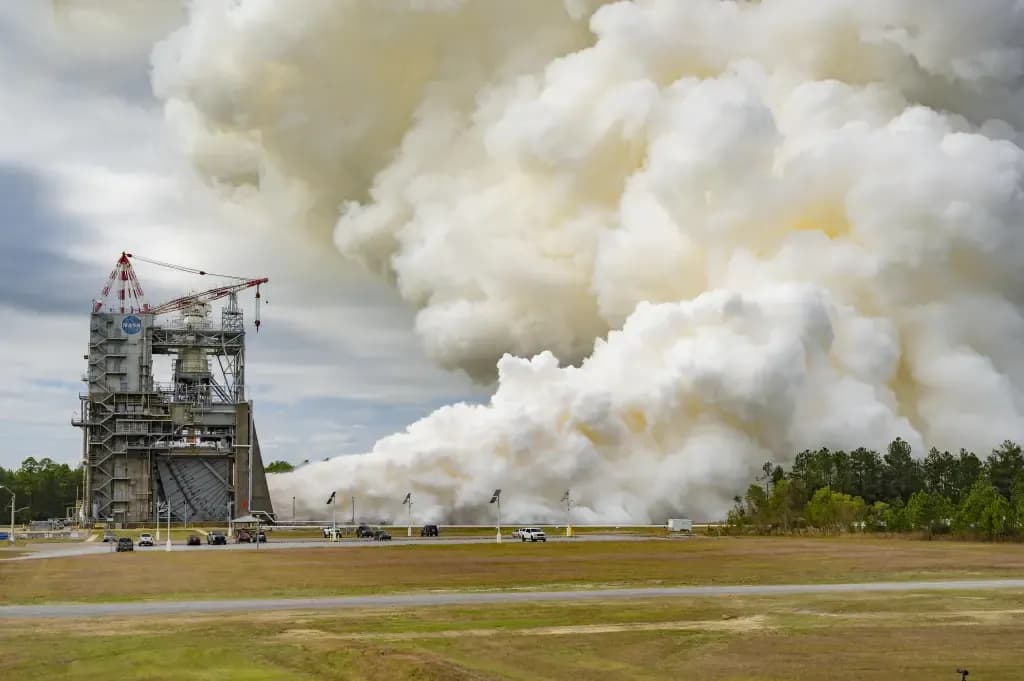
At the Stennis Space Center near Bay St. Louis, Mississippi, NASA carried out a hot fire test using developmental RS-25 engine No. 10001 mounted to the Fred Haise Test Stand. The test took place on Nov. 18, according to space agency news releases.
During the evaluation, test teams operated the liquid-fueled rocket engine for a planned duration of three minutes and 20 seconds, or 200 seconds. The exercise was carried out by a combined team of operators representing NASA, L3Harris Technologies, and Nova Space Solutions.
The hot fire test enables NASA and L3Harris Technologies to gather critical data intended to improve engine performance and reliability for upcoming Artemis missions. The Artemis programme is NASA's ongoing Moon exploration initiative aimed at returning humans to the lunar surface.
Engine Role in Artemis Missions
The RS-25 engine serves as the main liquid-fueled engine for the Space Launch System, a super-heavy expendable launch vehicle developed by NASA. For each Artemis mission, four RS-25 engines will fire together to produce up to 2 million pounds of combined thrust to propel the SLS rocket during launch.
Looking ahead to the Artemis IV Moon landing mission scheduled for 2028, the SLS rocket is slated to launch astronauts aboard the Orion spacecraft from NASA’s Kennedy Space Center in Florida.
The successful 200-second operation of engine No. 10001 on the Fred Haise Test Stand provides engineers with operational information necessary to refine hardware and support future flights under the lunar exploration framework.