
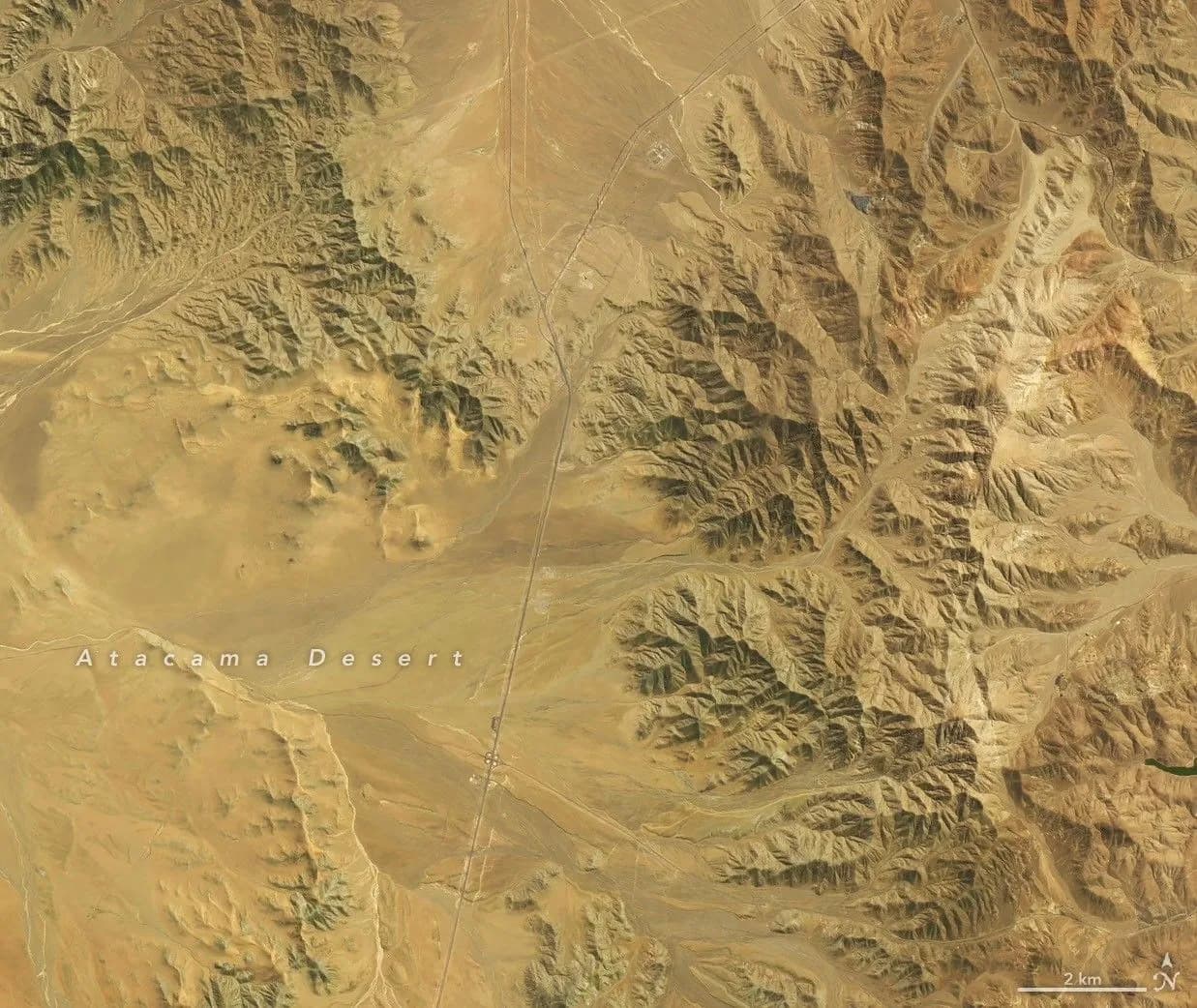
Unusually heavy winter precipitation and severe storms have awakened dormant seeds across the Atacama Desert in northern Chile, initiating an extensive flowering desert phenomenon in austral spring 2026. Satellite observations have documented portions of the famously arid region transforming into swathes of red-purple, green, and white.
According to Chile's national weather service, a series of storm fronts fed by an atmospheric river generated one of the heaviest July rain events in decades across a long stretch of the country, extending from the Atacama region south to Los Lagos. Following the rainfall, back-to-back winter storms in August blanketed parts of the Atacama Desert in rare snow.
The environmental transformation was captured from orbit by Earth observation instruments. The Operational Land Imager on Landsat 8 acquired images of the landscape in September, whilst the Operational Land Imager on Landsat 9 gathered additional scenes of the desert in October.
According to Roberto Chávez, the prominent red-purple sections visible in imagery from 24 October correspond to sweeping fields of pata de guanaco flowers, probably Cistanthe longiscapa or a related Cistanthe species. Additionally, Andres Moreira-Muñoz stated that green areas capped with white represent blooms of suspiros, or Nolana, identified as probably Nolana baccata.